START TYPING AND PRESS ENTER TO SEARCH
.
This article explains the shift in RV manufacturing from traditional plywood to thermoplastic honeycomb panels. Driven by the "Van Life" boom and higher customer expectations, builders are adopting this new material to solve chronic issues of moisture, rot, and excessive weight. The piece details the key advantages of plastic honeycomb, including 100% moisture resistance, significant weight savings, and improved insulation, and lists its versatile applications throughout a vehicle's structure, from subfloors to cabinetry. It concludes that this material is essential for building the next generation of durable, high-performance expedition vehicles.
This article focuses on the core advantages of plastic honeycomb panels, including lightweight (solving cruising anxiety), high strength (ensuring safety), environmental protection (fitting green positioning) and easy mass production (reducing costs), proving that it is the best matching material for new energy yachts.
This article analyses the inevitable trend of yacht electrification from three aspects: policy orientation, consumer demand and technological maturity. It points out that plastic honeycomb panels, as an optimal supporting material, meet the high requirements of new energy yachts for lightweight, durability and environmental protection, and empower the development of the industry.
This article decodes the industrial logic behind JD.com's Founder & Chairman's ¥5 billion investment in new energy yachts, including policy tailwinds, market potential, and curve-overtaking opportunities. It underscores that plastic honeycomb panels are the key to balancing low cost, lightweight design, and high reliability for affordable yachts.
This article introduces plastic honeycomb panels as a lightweight and highly efficient solution for Noise, Vibration, and Harshness (NVH) challenges. It achieves superior acoustic insulation by utilizing its unique cellular structure to trap and dissipate sound energy (targeting mid-to-high-frequency noise) and the viscoelastic properties of its polypropylene core to dampen structural vibrations (targeting low-frequency rumble). This exceptional acoustic performance, combined with lightweight and high-strength characteristics, makes it an ideal choice for applications in transportation, construction, and machinery enclosures.
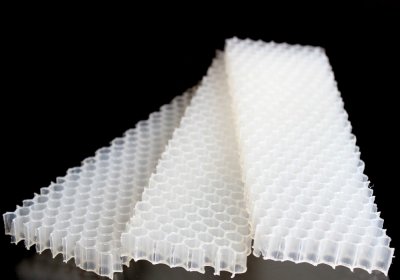
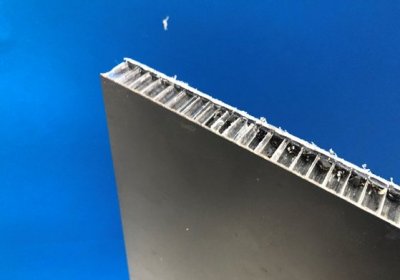
Honeycomb sandwich panels achieve high strength-to-weight ratio through geometric efficiency: facing sheets handle bending stresses while the hexagonal core resists shear. Thermoplastic cores add isotropic performance and corrosion resistance. This enables lighter, stronger components for transportation and construction.