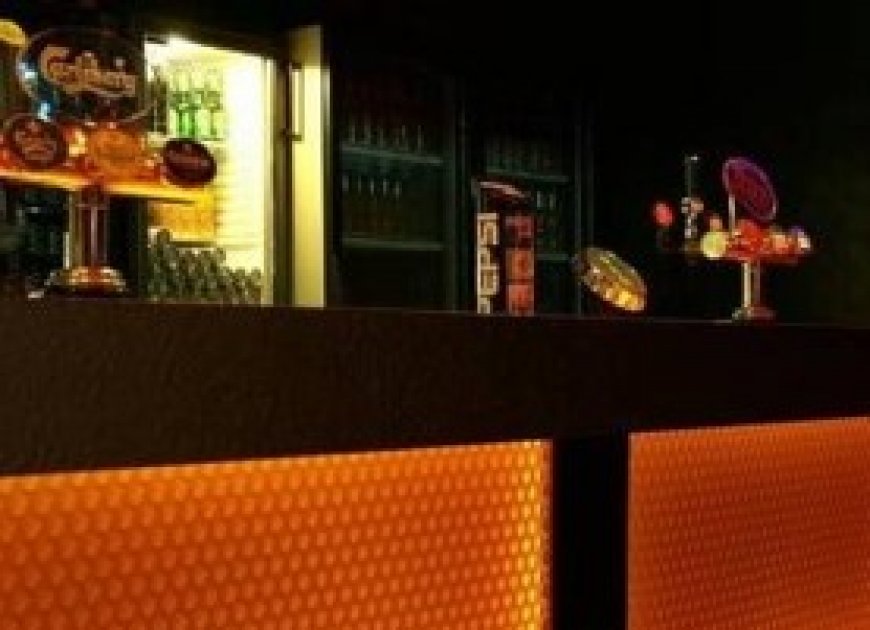
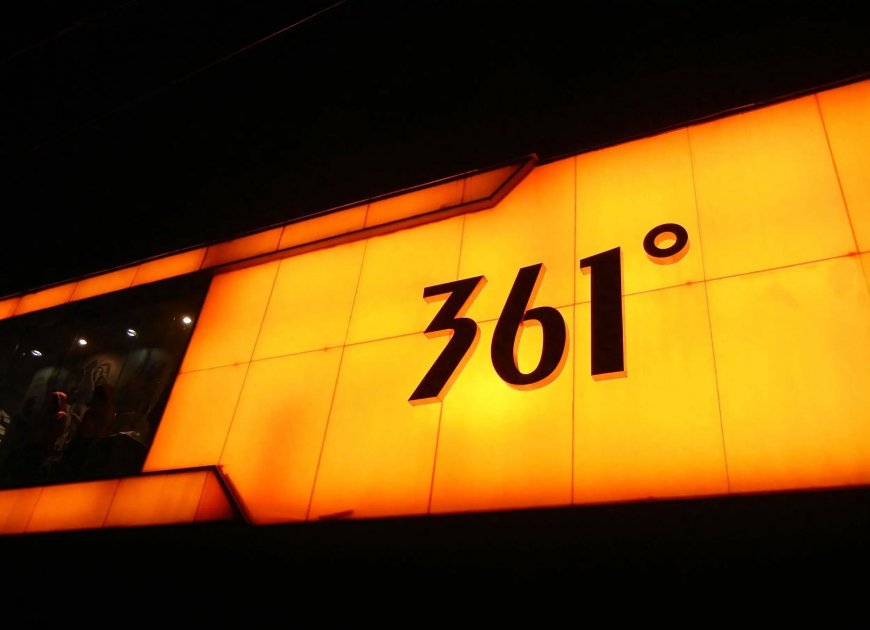
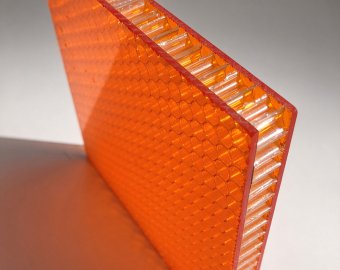
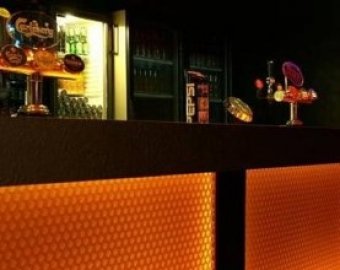
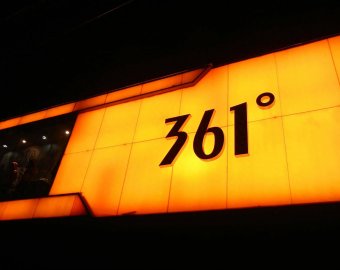
In a refrigerated display case, the open channels of a polycarbonate honeycomb help straighten the air leaving the outlet. In a light box, the same geometry serves a different purpose: it gives the structure depth while allowing light to pass through. An early project for a major Chinese sporting goods retailer illustrates this versatility.
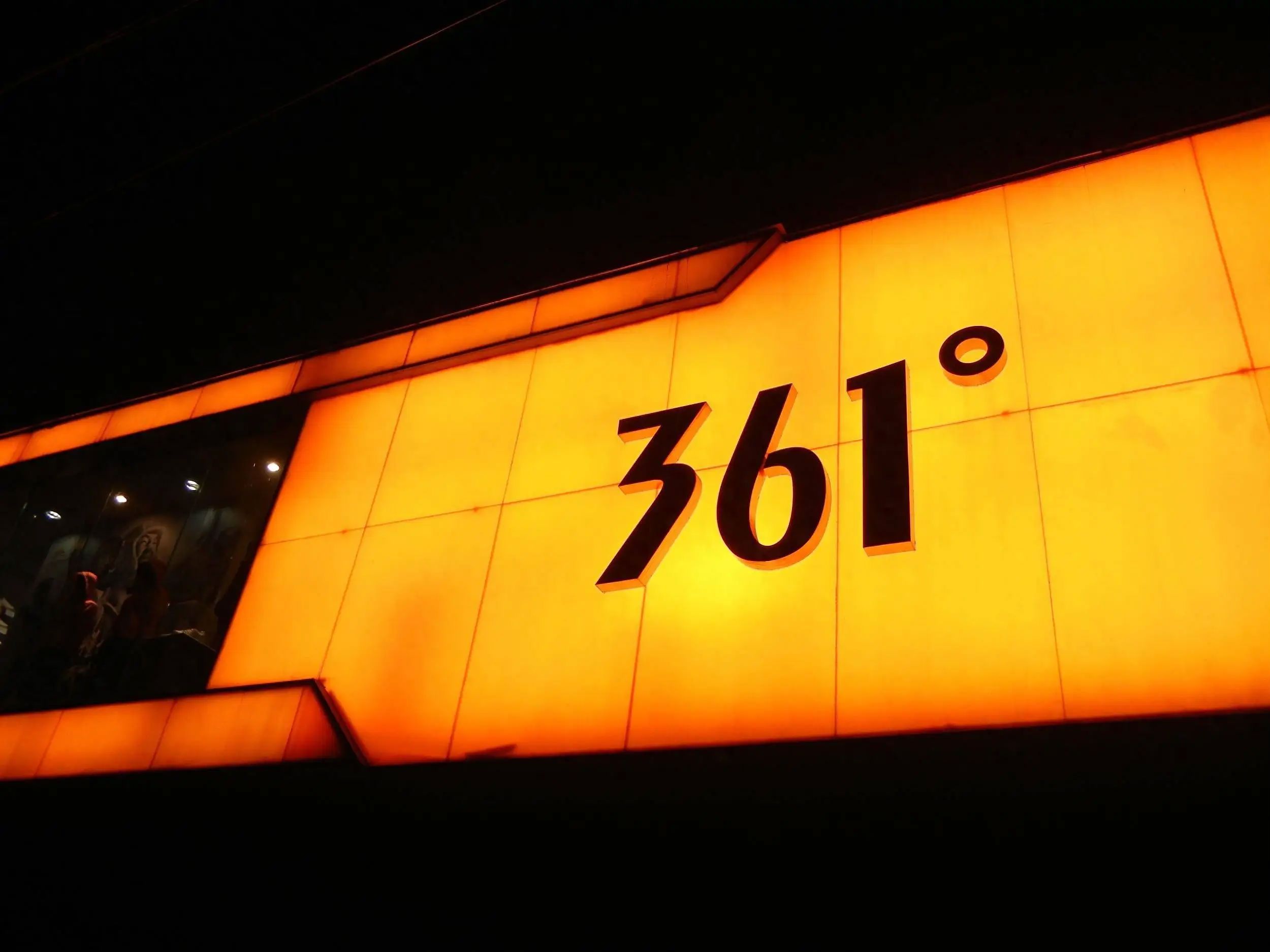
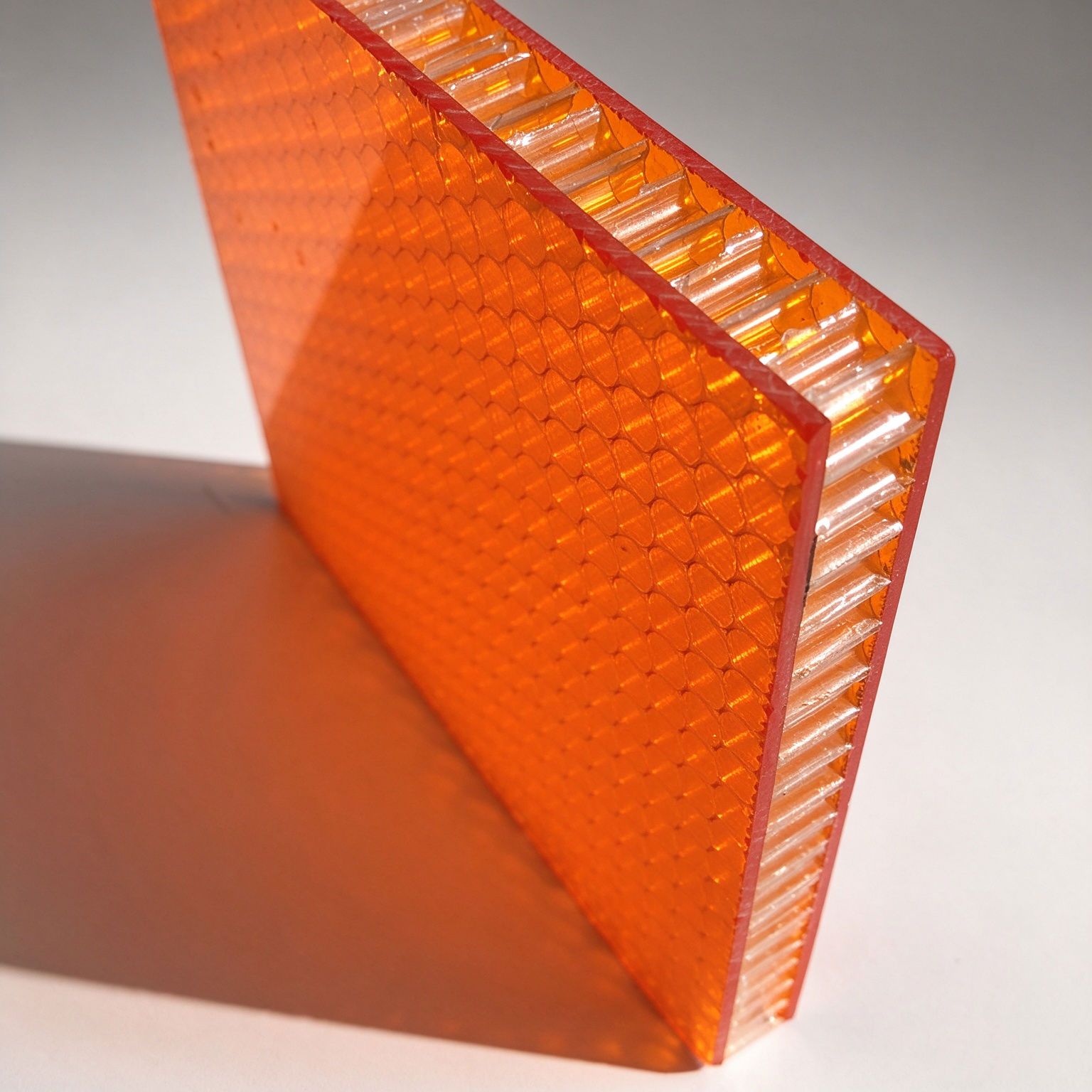
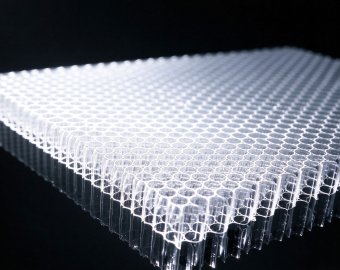
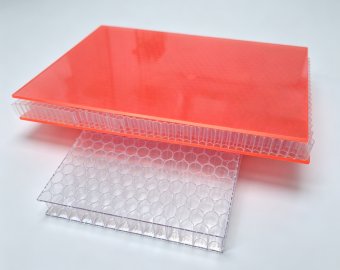
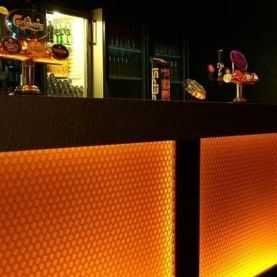
Around 2009, Qingdao Achieving Honeycomb supplied a retail display fabricator with a large volume of transparent, round-cell polycarbonate (PC) honeycomb. The fabricator used the material as an internal support in retail light boxes. The cores were 34 mm thick and supplied as full sheets slightly larger than 4 × 8 ft.
I. Client Profile & Project Requirements
Our customer made display fixtures for a national sporting goods chain. Over the two financial years ending in June 2010, the retailer reported a net increase of more than 2,000 authorised outlets. During this period of expansion, Achieving’s role was to supply the fabricator with clear honeycomb cores in the dimensions and volume required for light box production.
II. The Design Challenge
An internal support in a light box has to do its job in the path of the light. An opaque member can cast a shadow behind the display face. A solid transparent sheet admits light, but adds material and weight as its thickness increases.
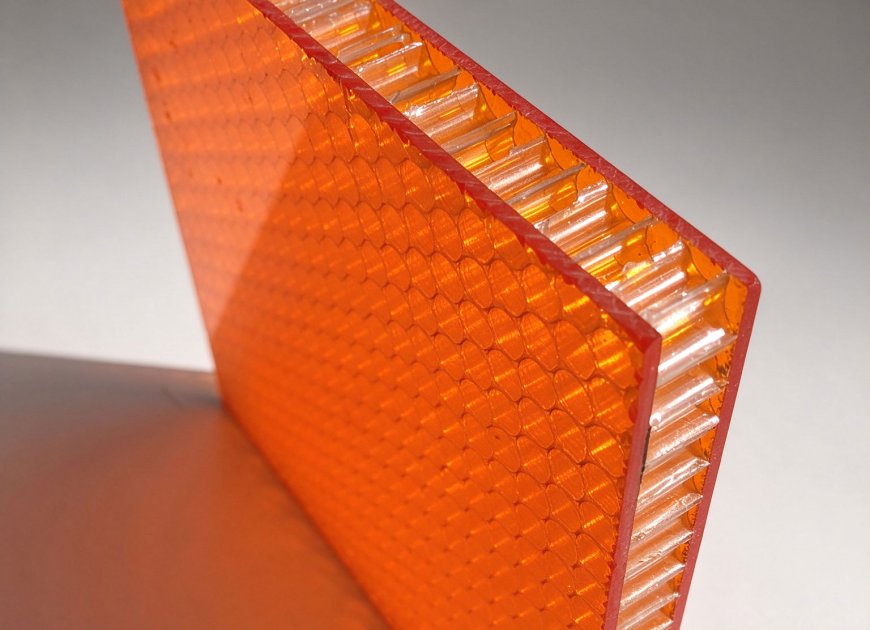
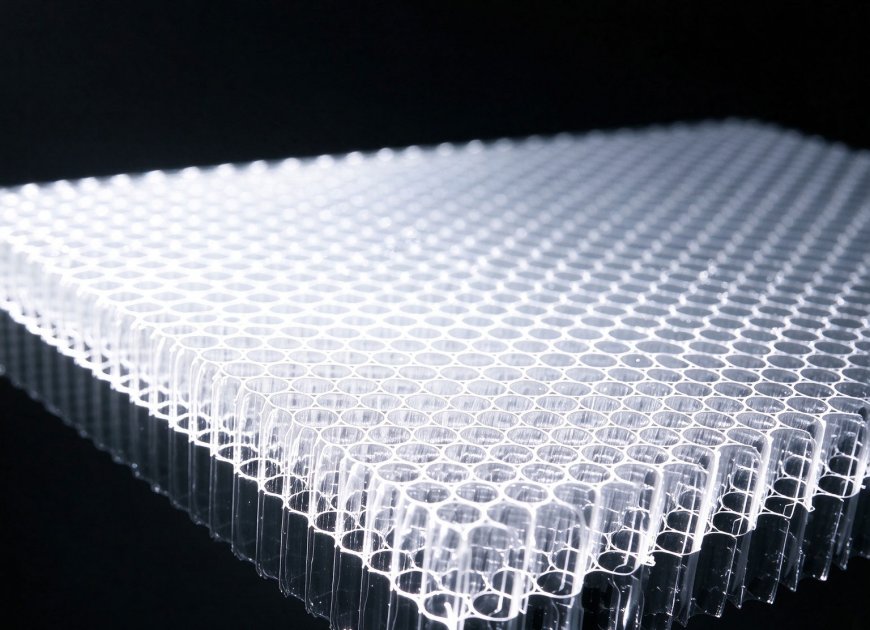
Clear PC honeycomb offered a practical combination. Its thin cell walls gave the core a depth of 34 mm, while most of the space within that depth remained open. The fabricator could use that depth for internal support and still allow light through the display area.
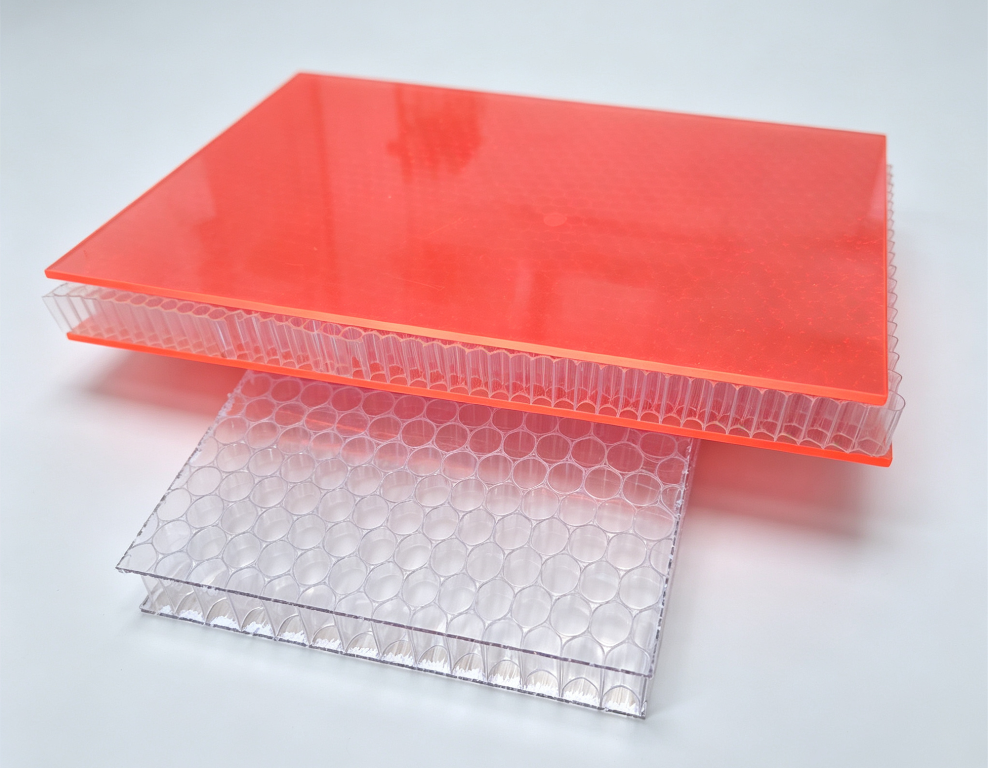
III. Achieving’s Custom Core Solution
Project specification | Material supplied |
Application | Internal support for retail light boxes |
Material | Transparent polycarbonate |
Cell geometry | Round, open cells |
Core thickness | 34 mm |
Sheet format | Custom full sheets slightly larger than 4 × 8 ft |
Supply scale | High-volume commercial production |
The extra sheet size mattered even though the difference was small. A standard 4 × 8 ft sheet would have left the fabricator short of the required dimensions. Manufacturing the core slightly oversized gave the customer room to cut a full-size support from one sheet, avoiding a core joint behind the illuminated face.
100% RoHS Certified for Global Compliance & Sustainability
These types of our products are fully RoHS compliant, proving our strict elimination of hazardous substances and dedication to premium material purity. By integrating our eco-friendly, certified components into your supply chain, you gain seamless international market access, zero regulatory friction, and enhanced brand credibility—delivering uncompromised safety and a reliable competitive edge to your business.
IV. Why Transparent PC Honeycomb Suited the Application
Light transmission. Both the open cells and the clear PC walls let light pass through the core. This gives a fixture designer more freedom in positioning internal support behind a translucent face. The appearance of the finished display depends on the face material, light source and spacing.
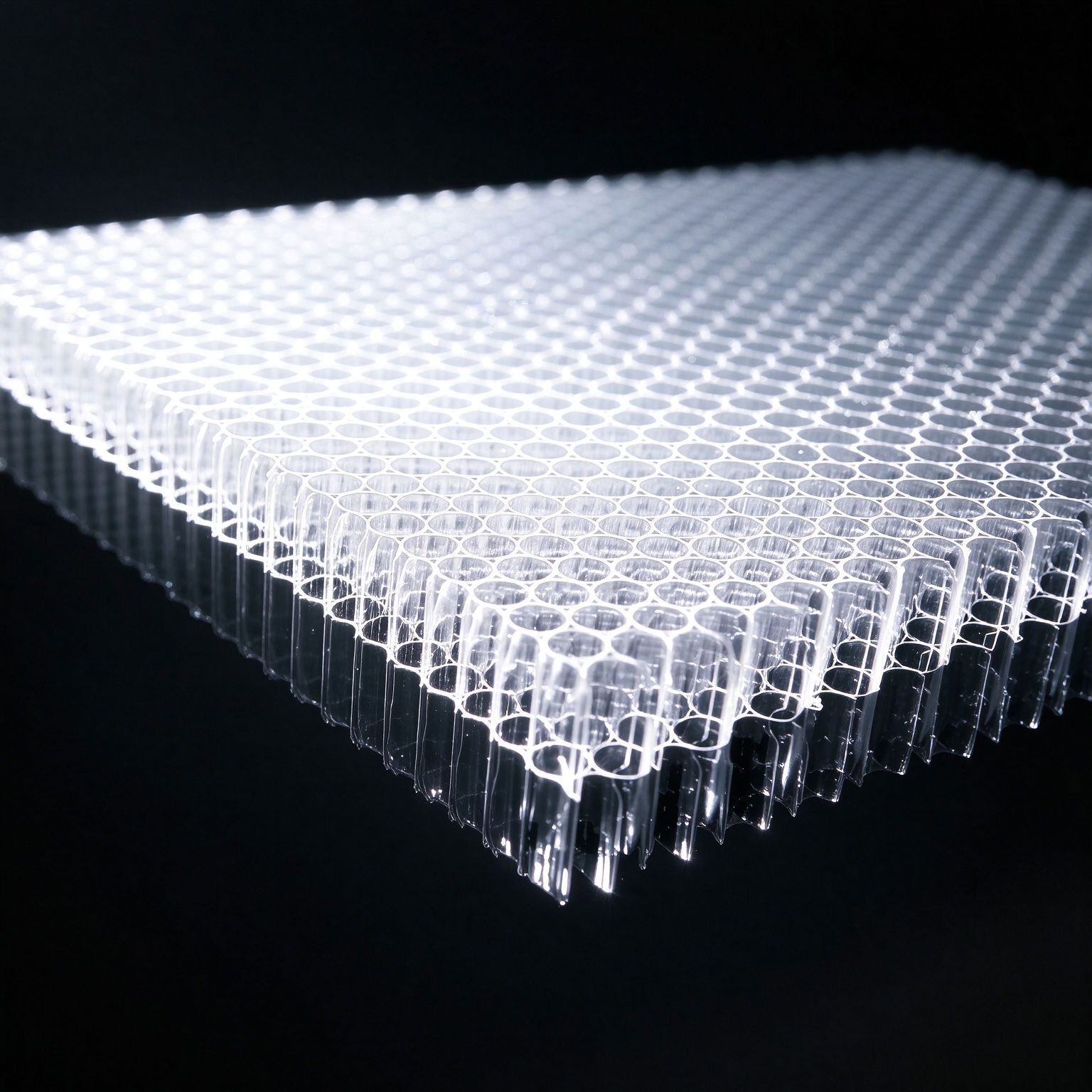
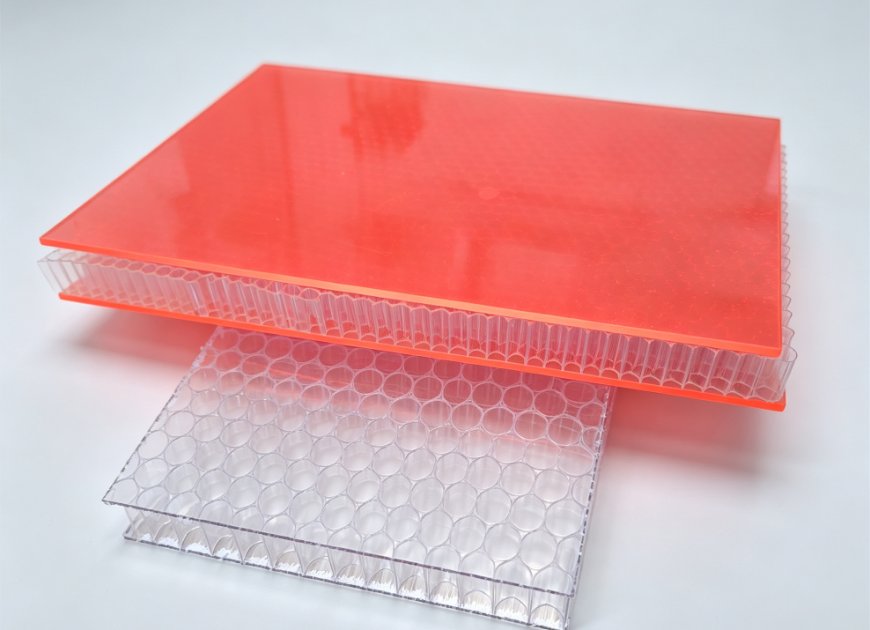
Structural depth with low material weight. Much of a honeycomb sheet’s volume is air. A fabricator can use the core as a spacer within a frame or bond it between skins to form a lightweight sandwich panel. The same sheet geometry can therefore serve different mechanical roles depending on how it is incorporated into the assembly.
Heat resistance in an illuminated enclosure. A retail light box can stay lit for long periods, making heat resistance relevant to material selection. Polycarbonate combines transparency with resistance to elevated temperatures. For a new fixture, the resin grade, temperature at the core and load on the support all matter when assessing long-term performance.
V. Project Outcome & Relevance to Other Applications
Achieving fulfilled the high-volume order, and the oversized cores were incorporated into finished retail light boxes. The project is an early example of our work with a fabricator serving a major retail brand, and of our ability to manufacture transparent PC honeycomb to a project-specific thickness and footprint.
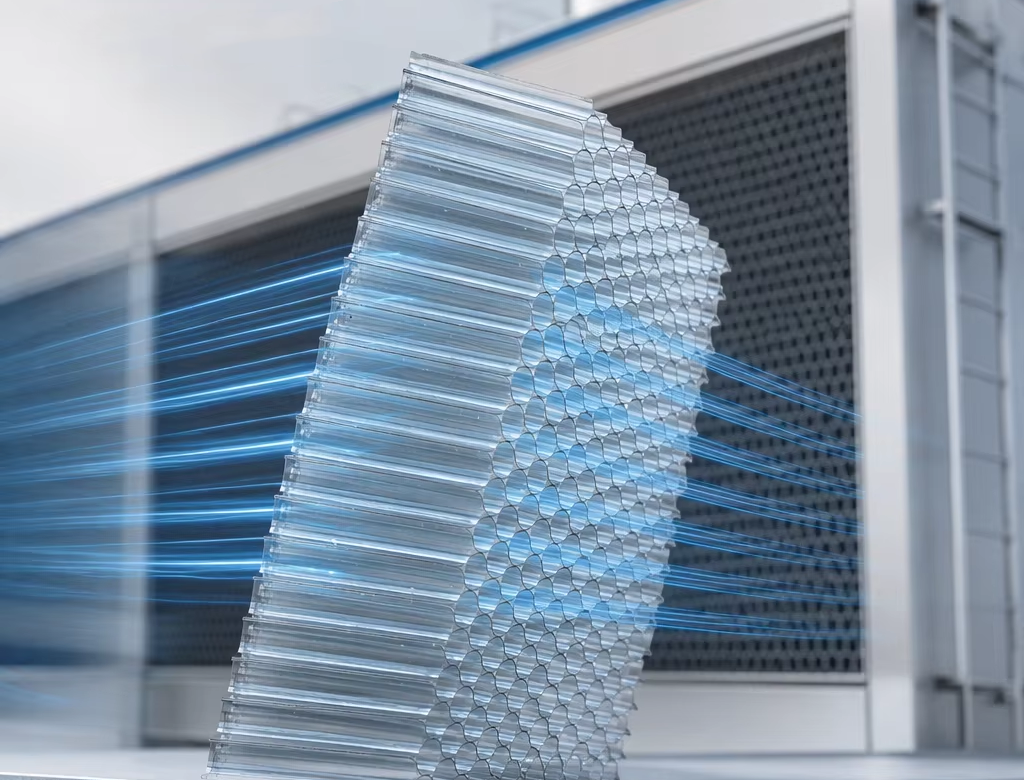
For a product designer, the useful question is what needs to pass through the part, and what the part needs to support. In a refrigerated cabinet, airflow may determine the cell geometry. In an illuminated fixture, light transmission, depth and support may guide the design. If your product calls for a different combination, share a sketch and tell us what the component needs to do. That gives us a starting point for reviewing the material, cell size, thickness and sheet dimensions together.